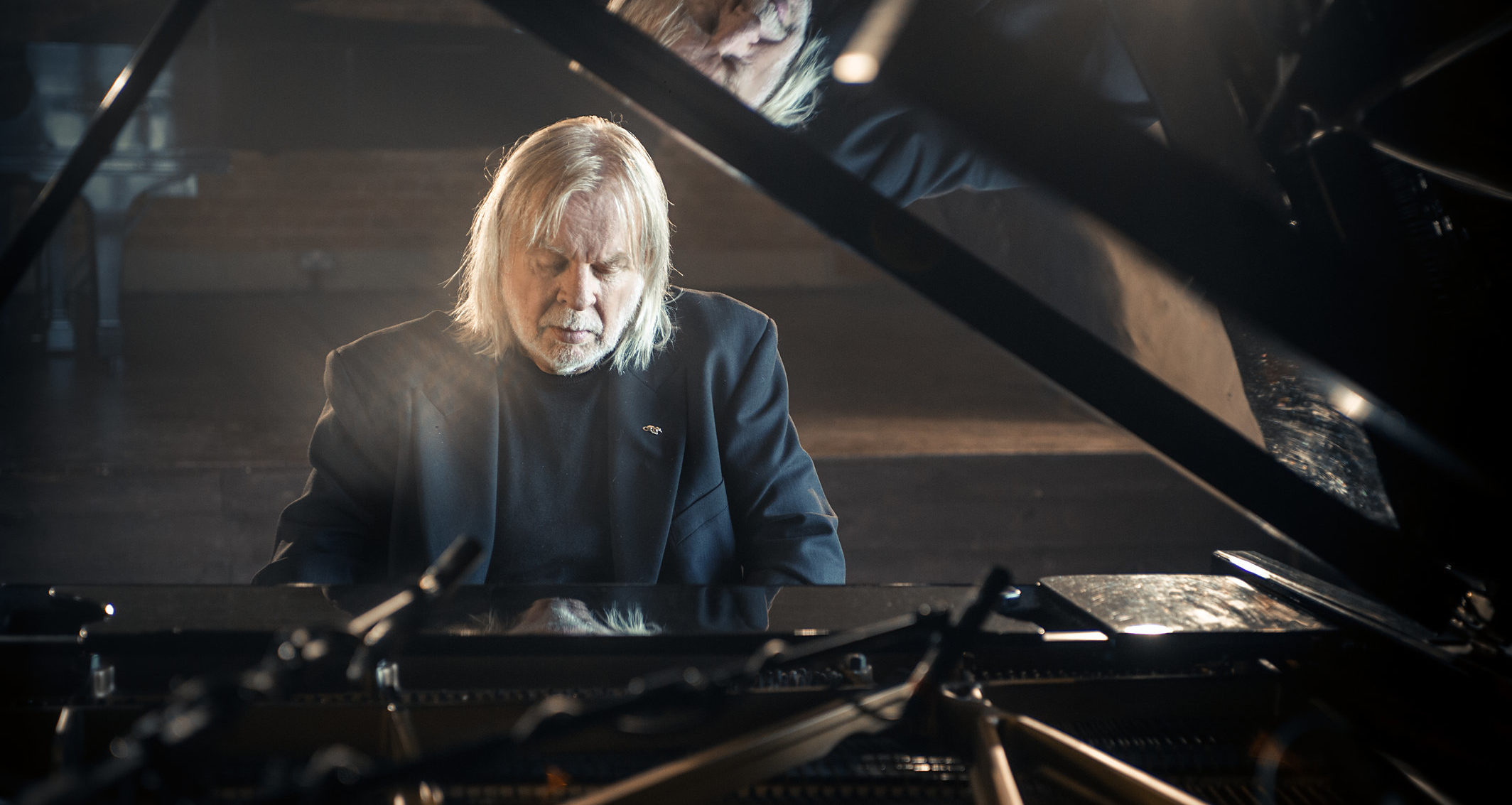
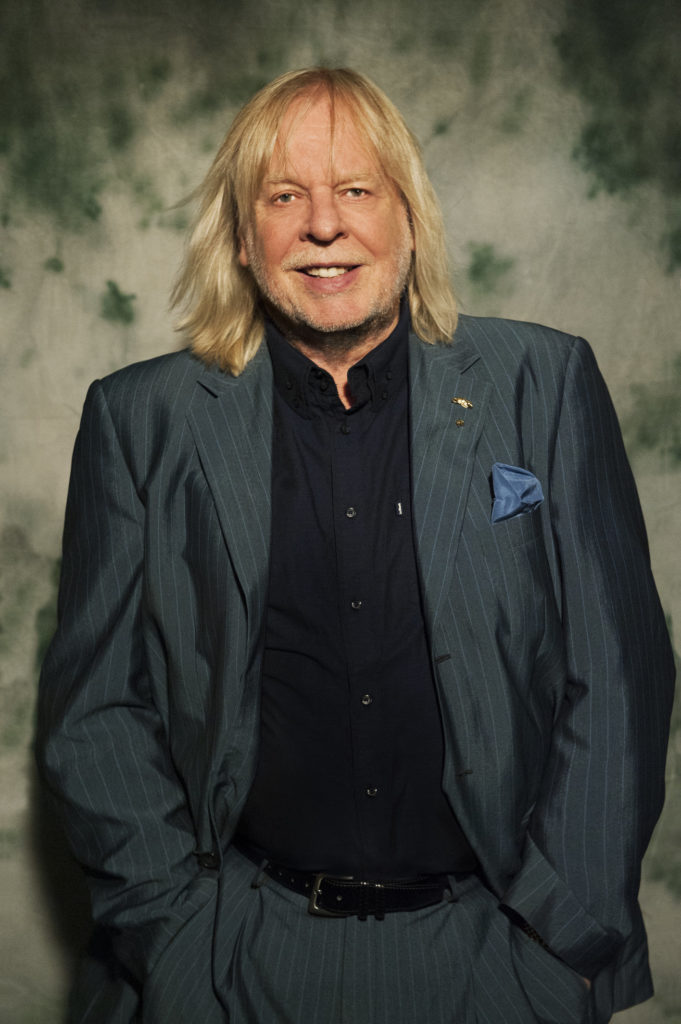
If there is anybody who lived Spinal Tap, it is trailblazing keyboard wizard Rick Wakeman. I mean, the onetime hardliving rock star had already had a couple heart attacks by the time he was 25.
He was not only an on-and-off member of progressive rock band YES but Wakeman – who actually turned down David Bowie’s offer to be part of Bowie’s legendary band The Spiders from Mars, and was one of the very few people who knew Bowie was ill – was a much sought-after session musician in the late sixties and early seventies, playing on more than 2,000 records, including such hits as Cat Stevens’ Morning Has Broken and David Bowie’s Space Oddity and Life on Mars.
Wakeman also worked with everybody from Marc Bolan and Black Sabbath to Lou Reed and Elton John.
Soon Wakeman’s own solo albums topped the charts worldwide: Journey to the Centre of the Earth and The Myths and Legends of King Arthur and the Knights of the Round Table album have sold more than 10 million copies.
His most recent albums Piano Portraits (2017) and Piano Odyssey (2018) came about after the clip of his memorable January 2016 BBC Radio 2 tribute to Bowie went viral.
Wakeman will talk about all this and more when he brings his critically-acclaimed Grumpy Old Rock Star Tour to Montreal’s Olympia Theatre, combining piano music and storytelling about his 50-year career. If you’ve seen Wakeman’s speech when YES was inducted into the Rock and Roll Hall of Fame in 2017, you know he is also a stand-up comedian.
I recently spoke with a very talkative Wakeman to preview his September 28 concert in Montreal.
Curtains Up: My understanding is your first booking as a session musician, and your first time in a recording studio, was somehow connected with the Ike and Tina Turner band.
Rick Wakeman: You’re close. It was with a guy named Jimmy Thomas who was with the original Ike and Tina Turner band. Ike didn’t sing, he played the guitar, and they had a singer called Jimmy Thomas, and he was a great singer who sang alongside Tina. In what would have been 1966 he made a (solo) album.
To make a long story short, I was in a record shop in West London when this bass player friend of mine came into the shop and said that Jimmy was recording at Olympic Studios with Denny Cordell. (Customs) let Jimmy in but not his band because – to put this politely – they had a couple things on them that they shouldn’t have had! They were detained at Her Majesty’s pleasure, and so the recording session was short of an organ player and someone to do the brass arrangements.
You ended up doing both.
I did. I was 16-years-old. I walked into this big studio and there was a great Black soul band that they had put together. So I sat at the organ and Denny Cordell – who was producing – told us to play. I played the organ the only way I know how, which was classical with a little blues. We finished running through the track and then Cordell said, “Can you come in to see me, Rick?”
And I thought, “Oh, he’s going to have a go at me.” So I said I’ll get to him first: “You know, Mr. Cordell, I know you may not like Booker T-type stuff on this but that’s not how I play …”
And he said, “Listen, is that the style you normally play?”
“Well, yeah,” I replied.
He said, “Then don’t ever change. You stick to that, it’s unique, and you’ll do great.”
I love a screaming diva, and you worked with one of my faves, Chaka Khan, on 1984 Overture – which clocked in at 10:57 – on your 1984 solo album released in June 1981. What was it like to work with Chaka?
Great! I love her. She also recorded the songs Julia and Robot Man brilliantly. I met her in Montreux as she came over to record, not with Rufus but on her own. We became really good friends.
She said to me, “I love your King Arthur album.”
I said, “What? Prog rock?”
She said she always wanted to sing on a prog album and I said, “I’ll take you up on that one.”
We put together the 1984 album with Tim Rice writing the lyrics and we wrote three of the songs with Chaka in mind. I called her up and she said, “I would love to sing Tim Rice lyrics and your music. I’m there.”
So she came over to London and recording the songs. What a voice and what a lovely, lovely lady. I haven’t seen her for years but would love to meet up again because she is very special.
In 1971, how difficult was it to choose to be either a member of The Spiders from Mars, or a member of YES?
It wasn’t that difficult, to be honest. Even though David was the most influential person I’d ever worked with – learnt more from David to work in the studio than anybody, I loved his music – the truth is with Spiders From Mars there would have been a ceiling to how far I could have gone. With the arrangements of the songs, you are working within a framework. Whereas YES – who were nowhere as big as David at the time – were still growing. When I talked to David about it, to his credit he said, “That is absolutely the right decision. I would have pushed you towards there anyway.”
I wonder if young people now think of Rock and Roll as old-fashioned? Or perhaps the better question is, do you think rock is now of another era?
No, because there are so many young bands who are playing electric and acoustic guitars. If you listen to them, it could well be the seventies.
My father and his family come from Kent, England, where my godfather Roy Burnett tuned pianos for such folks as John Peel. I watched him tune pianos a couple times. I was wondering how regularly you keep your pianos tuned, and how important is a properly-tuned piano?
A lot of pianos are over-tuned. I tune mine roughly every six months. No more than that. I have a great tuner and he’ll say, “I’d leave this for another couple of months.” Because the more you do it, it will weaken things and then they’ll go out of tune a whole lot more. Tuning pianos is an incredible art.
I read that you were never into drugs but had a couple heart attacks by the time you were 25. You quit smoking in 1978 and drinking in 1985. How’s your health today? Is touring tough on your body?
Yes, it is rough. I’m 70 now and I suffer from type 2 diabetes and occasional very high blood pressure. All the things that happen as you get older, I’m afraid. I try to do healthy things and eat healthy for weight control. But I wake up every morning, I’m smiling, my eyes are open, I’m happy and I love what I do. As long as that continues, I’ll do the best that I can.
I also have a lovely wife of 17 years who is 25 years younger than me, so she keeps me young, and I have six kids and 11 grandchildren.
Is it true they call you Grandpa Grumpy?
Yes, because of the TV show in England, Grumpy Old Men, which ran for six series (seasons). I’m introduced everywhere I go as Grumpy Old Man or Grumpy Old Rock Star.
You’re a fun storyteller and your sense of humour shows in your two memoirs, Grumpy Old Rockstar (2009) and Further Adventures of a Grumpy Old Rockstar (2010). In your first book you wrote that you have enough stories for 20 books. Can we expect a new installment of Grumpy Old Rockstar?
Next year I am going to do Yet More Ludicrous Adventures of a Grumpy Old Rockstar. It was probably a bit of an exaggeration to say there was enough material for 20 books, but there is definitely enough for three, if not four.
Have you always been funny?
Apparently so, yeah. It started at school, which still had corporal punishment. When I hadn’t done my homework I discovered very quickly that if you could make the teachers laugh, then you got away with the cane.
“Just go and sit down, Wakeman.”
I learnt that you can’t be angry if you’re laughing. I also found that in life. I love to laugh. Nearly all of my friends are comedians. We just howl with laughter. And because I have had a fairly interesting life – one friend said, “Nothing normal ever happens to you, even normal things don’t end up normal” – I have had a great funny life.
Rick Wakeman Rock Hall acceptance speech begins at the 6:51 minute mark
YES was inducted into the Rock Hall in 2017 by Canadians Geddy Lee and Alex Lifeson of Rush. Your Rock Hall induction speech was laugh-out loud hilarious. How impromptu was it?
It was all off the cuff. I love awards ceremonies, they’re great, but acceptance speeches are usually exceptionally bad, beyond belief bad. I mean, how many times can people thank their father for buying their first guitar? And a Great Uncle for getting the strings? And their Mum for driving them to their first gig? Nobody gives a toss! Nobody cares. And the diehards know the history anyway.
When people give these boring acceptance speeches you can hear a hum around the hall because it’s just people around the tables talking. If you’re not being irreverent, they’re not interested. Your Uncle Bert bought you a saxophone? Who cares! Just get it out of the way and play something.
Trevor (Rabin) was the main reason I did that speech (at the Rock Hall) because I was just about to go up and it was going to be yawny. Just before Trev went, “Go for it.” Trev knows I do a lot of stand-up comedy in the U.K.
He told me, “Go for it!”
I said, “I can’t, I’m not known for comedy over here.” But Trev said it was about time I was.
I couldn’t do any of my routines because they’re long, so I thought I would do a couple of one-liners I do at corporate events and see how it goes. It was very much think-on-your-feet.
People seemed to really enjoy it which is the way acceptance speeches should be. Be proud that you received an award, but don’t take yourself seriously.
Rick Wakeman’s The Grumpy Old Rock Star Tour headlines the Olympia Theatre (1004 Saint-Catherine Street East) on September 28 at 8 pm sharp. For tickets, visit olympiamontreal.com. For more Rick Wakeman, visit www.RWCC.com.
All photos courtesy Rubin Fogel Productions.