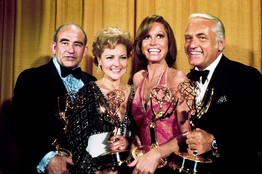
By Stuart Nulman
In the spring of 1970, as Allan Burns and James L. Brooks, the creators of a brand new sitcom that would star Mary Tyler Moore (last seen on the tube as Laura Petrie on “The Dick Van Dyke Show” from 1961-66) were sitting down with Mike Dann and several other executives from CBS – the network that was about to air the show – there was one sticking point that both sides were heavily debating about before the pilot episode was about to be filmed: how would the character of Mary Richards end up as a single career women?
Basically, being a divorcee was out of the question (it was a taboo subject on any TV show at the time, let alone a sitcom). So what were the creative minds and powers that be to decide of Mary Richards’ fate before she headed off to Minneapolis and “turn the world on with her smile”?
This is one of the backstage stories that are dealt with in fascinating detail in Jennifer Keishin Armstrong’s history of the pioneering and influential sitcom “The Mary Tyler Moore Show” called “Mary and Lou and Rhoda and Ted”.
The book deals with practically every detail of the show’s evolution and its then-revolutionary approach of realistically portraying American women in their 30s who were carving out a life and career on their own without a husband and kids. Armstrong’s main argument is that Brooks and Burns had the foresight to hire a group of women writers whose lives more or less echoed that of Mary Richards and Rhoda Morgenstern (i.e., Treva Silverman and Susan Silver) and managed to produce scripts that would put Mary and Rhoda in realistic situations, in which they would face contemporary women’s issues in an entertaining, comedic light (whether it be dating, spending the night with a man they met at a party, or even birth control).
Armstrong also argues that another ingredient to the show’s success during its seven-year run were the actors who were cast, whose different acting styles somehow perfectly fitted the roles they were hired for, and gelled so effectively in such a short time that the entire cast became a family, and that the weekly task of putting together each episode was regarded as “the best jobs of their lives”. There are also some great anecdotes to how the characters that made up Mary Richards’ world were developed over seven years. One interesting example was the late Ted Knight’s lobbying to the producers to have newscaster Ted Baxter become a more multi-dimensional character and less of an incompetent, self-centered buffoon that he was quickly being known as.
Also, the reader is fortunate to discover some interesting behind-the-scenes moves that the actors, producers, writers and directors did that helped in the development of the series’ classic episodes. One prime example is “Chuckles Bites the Dust”, which aired in season six and its innovative, humourous way of approaching the touchy subject of death made it one of the most memorable single sitcom episodes in TV history. In order to have Mary preserve her giggle fit during the memorable funeral scene of Chuckles the Clown (who was accidentally “shelled” by an elephant when he was dressed as a peanut), the producers made sure she had no personal contact with any of her co-stars during the day of taping until that scene was shot.
“Mary and Lou and Rhoda and Ted” is a richly entertaining book about how a sitcom about a single career woman in her 30s that originally thought to be doomed from the start, became a highly regarded TV show whose lasting legacy was its positive portrayal of women in contemporary America, and blazed the trail for future generations of TV shows where women became the dominant force in front of and behind the camera, such as “Sex and the City” and “Girls”. As well, it proved that if you get the right people to work on this little show that was at the right place at the right time, you can have an instant classic on your hands. And as stated on the plaque that was placed by MTM Enterprises head (and former husband of Mary Tyler Moore) Grant Tinker at Soundstage 2 where many of the show’s episodes were taped: “On this stage a company of loving and talented friends produced a television classic.”
This review originally appeared in the May 25, 2013 edition of the West End Times.

