By Richard Burnett for Curtains Up
@bugsburnett
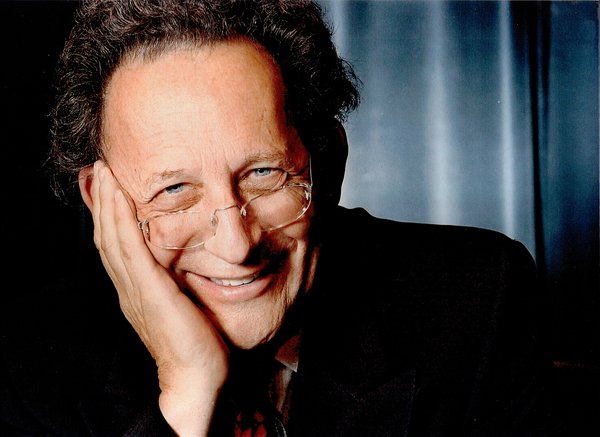
It is great fun to chat with Maestro Boris Brott of the McGill Chamber Orchestra because he is a great storyteller – and has mischievous eyes. The internationally-acclaimed and charismatic conductor has wowed audiences worldwide, from Carnegie Hall to Covent Garden, and will conduct the MCO and Atelier lyrique de l’Opéra de Montréal in two one-act operas, La Voix humaine by Francis Poulenc (sung in French) and Trouble in Tahiti by Leonard Bernstein (sung in English) on Feb. 3 at Théâtre Outremont.
I was particularly intrigued by Trouble in Tahiti since it was the basis for Bernstein’s second version of his opera A Quiet Place, which premiered in Vienna in 1986 when a then-25-year-old Kent Nagano – now the Grammy-winning Maestro of the Orchestre Symphonique de Montréal – joined Bernstein as a student. The gay-themed A Quiet Place was performed by the OSM during Montreal’s 2014 Gay Pride celebrations when Nagano told me, “When I knew [Bernstein] his personal relationships were changing, he was in the process of refining his identity, and as a composer and performing artist he went through immense transition at huge risk. He knew this could threaten his popularity, but he had the courage to see it through.”
Brott first got to know Bernstein some 20 years earlier when he too was a young man. In a frank Q&A with Curtains Up, Brott remembered his mentor Leonard Bernstein on the eve of the MCO’s staging of Trouble in Tahiti.
Why did you decide to perform Trouble in Tahiti as a staged concert opera?
It was a joint decision between the MCO and the Atelier lyrique de l’Opéra de Montréal. We both wanted to use our musicians and singers effectively in a staged concert opera. I think both works [La Voix humaine and Trouble in Tahiti] are fascinating and comment on the human condition.
How do you especially feel about performing Trouble in Tahiti?
Tahiti is personal to me because I was Lenny’s assistant in New York during his last years at the Philharmonic [in the 1960s] when I became very close to his family. I spent a lot of time in the Bernstein home. And that’s an interesting perspective in which to do Trouble in Tahiti – not because it was autobiographical or intended to be, because as you know, it was written during his honeymoon [after he married Chilean-born American actress Felicia Cohn Montealegre in September 1951]. It has elements of a Broadway musical, but it’s really an opera. But as with any great performer, he has a voice and it permeates all of his works. And it is very intelligent music.
What kind of responsibility do you feel playing this piece?
It’s realizing a great dream of mine. But working an opera is really a collaboration. It’s not really a top-down approach. We have great musicans and singers.
How old were you when you worked with Bernstein?
I was 23-24. It was a wonderfully inspiring time. He lived and breathed music and life. The two intertwined in a most wonderful way. He truly was a genius and a wonderful teacher. It was an exciting time in my life.
How did Bernstein influence your own very accomplished career?
His love of education and teaching inspired me to do the same at various orchestras over the decades. We’re not top-down, we’re going to be fun and engage the audience.
What was it like to be your parents’ son, particularly in Montreal? After all, it was here that the McGill Chamber Orchestra was founded 75 years ago, in 1939 by your dad, MCO Artistic Director Alexander Brott and his wife – your mom – Lotte Brott. Was it intimidating?
Not for me. I found my father to be an extraordinarily enlightening man. My parents really opened me to explore life. They didn’t dominate me. At one point I had no friends and I was practicing [music] all the time and I wanted to quit. [So] they encouraged me to quit for a year and told me to see what I feel like [then]. I then discovered this really was for me after all. Growing up in my parents’ home was like growing up in the Bernstein home – all the great musicians of the day dined at our table.
You joined the MCO as Associate Conductor in 1989, was appointed co-conductor of the orchestra in 2000 and, upon the death of your father in 2005, was appointed Artistic Director of the MCO.
It was a very gradual process and I became involved when my both my parents were still alive. My parents were very conservative in orchestra development, and that’s part of the secret to [the MCO’s] survival, because it has had many challenges – especially in recent years – to survive and flourish. Right now, thanks to a board of directors headed by Sharon Azrieli and MCO executive director Taras Kulish, it is once again enjoying a renaissance.
AN EVENING OF CHAMBER OPERA with the McGill Chamber Orchestra and Atelier lyrique de l’Opéra de Montréal, under the direction of Maestro Boris Brott, performing La Voix humaine by Francis Poulenc and Trouble in Tahiti by Leonard Bernstein, at Théâtre Outremont, Feb. 3 at 7:30 p.m. Tickets can be purchased from the Théâtre Outremont box office by calling 514 495-9944, extension 1, or at https://billetterie.theatreoutremont.ca. Learn more about the MCO’s 2014-2015 programming at www.ocm-mco.org.