By Andreas Kessaris for Curtains Up! (@AKessaris)
“Blunt-featured and barrel-chested with a full head of dramatically dark, pomaded hair, Klein doesn’t share his clients’ flair for fashion. He prefers sneakers and sweatshirts to paisleys and Nehru jackets. But while Klein doesn’t look like the most powerful and controversial player in the music business, he is in fact a ruthless and brilliant businessman given to bold talk, bolder strategies, and a confrontational style that ranges from brusque to insulting.”
-Fred Goodman (from Allen Klein)
I have often said that I was born 25 years too late. I would’ve loved to have been an adult during, and an active part of, the classic, golden age of rock & roll; that magical time from the early 60’s to the late 70’s. Not as a musician (no, I tried that dream and it did not work out for me). I’d want to be a journalist for Rolling Stone magazine, or maybe even a road manager or rock impresario (although I have the annoying feeling that I would’ve ended up a dirtbag roadie).
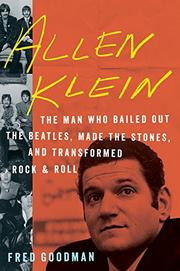
It’s no secret I enjoy reading insider books about that time period, especially the behind-the-scenes stories. Why was this song included on an album, but not that one? Why was this record released on this date? Why was that picture used for the cover? How did an accountant from New Jersey forever change rock & roll and the recording industry? The answers can be surprising. Especially when you discover that almost everything that happened was deliberate, but yet it was also by accident. And what we thought were creative decisions, were in fact done for business reasons. That’s what I found when I read Allen Klein: The Man Who Bailed Out The Beatles, Made The Stones, and Transformed Rock & Roll by Fred Goodman.
The book recounts the personal and professional story of a complex and interesting man as well as the postwar record industry in incredible detail, focusing mainly on Klein’s “obsession” with landing The Beatles as clients (I was amazed to discover they needed a financial bailout; read the book to understand why). Goodman also includes intricate specifics of the deals and contracts that had me more than once re-reading sections to make sure I understood all the clauses.
The material in Allen Klein at times does feel a little thin. There is one chapter where the author digresses to an unnecessarily long story about Andrew Oldham, which left me confused as to why he felt it so important to go into such minutiae.
We often overlook the contributions of the less-than-glamourous lawyers, accountants, and managers in the entertainment industry; people who can be just as, if not more, creative in their own right than the artists themselves. With Allen Klein: The Man Who Bailed Out The Beatles, Made The Stones, and Transformed Rock & Roll, Goodman makes sure they get their due.