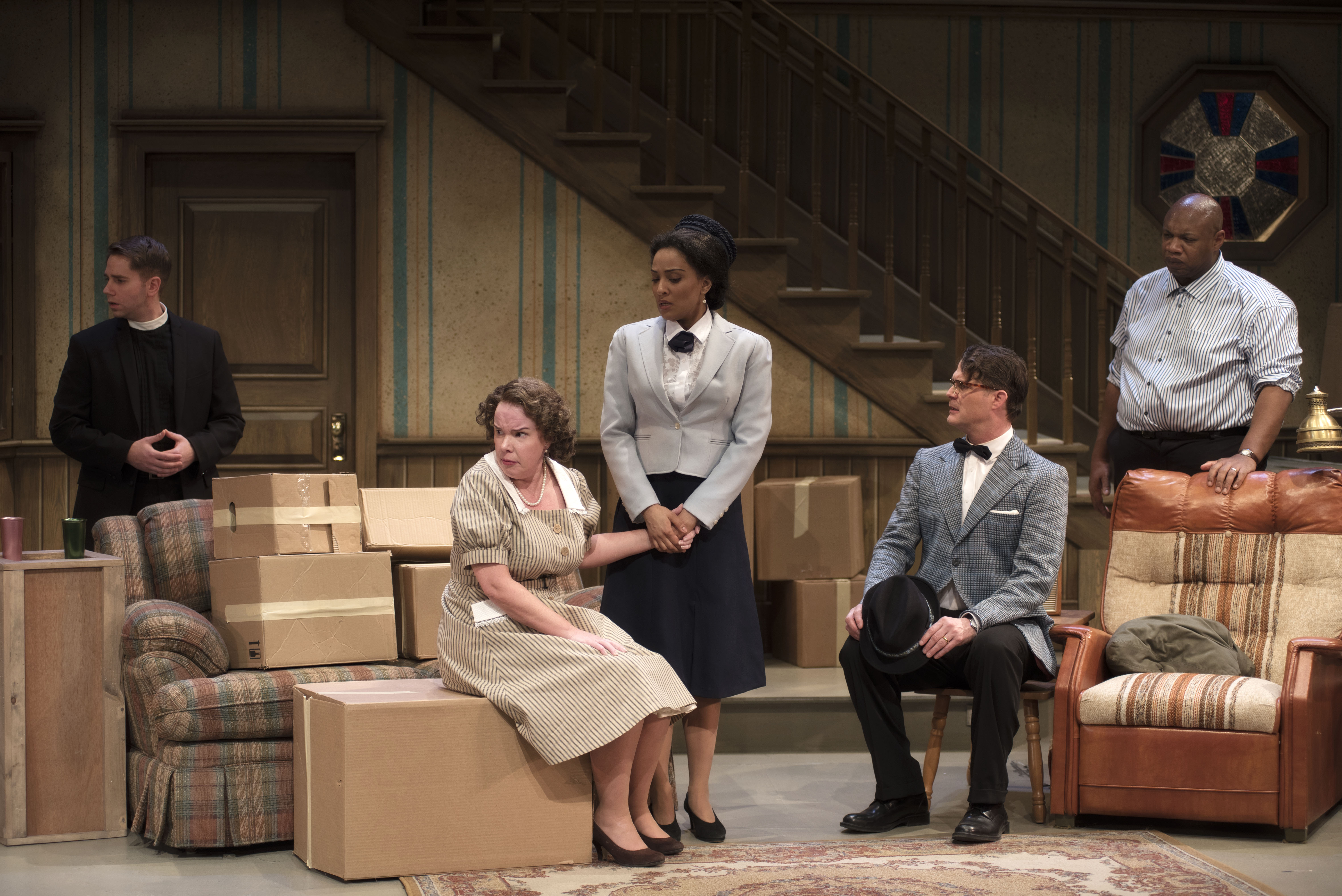
The Centaur Theatre’s 56th season kicks off with the world premiere of Sakura – After Chekov. Written by Montreal playwright Harry Standjofski, it’s the story of an upper-class family in Quebec forced to sell their estate to pay off debts incurred by years of mismanagement and decadence.
Fashioned after Chekhov’s The Cherry Orchard, this witty comedy explores themes of heritage, loss, and the relentless passage of time, adding a fresh new take to a timeless masterpiece.
Curtains Up spoke with Harry Standjofski about the reimagining of Chekhov’s classic and what he hopes audiences will take away with them.
Why The Cherry Orchard? What was it about Chekhov’s story that inspired you to use it as a launching pad for this production?
Chekhov has always been one of my biggest theatrical influences. Working on this text for another project I got suddenly wrapped up in the idea of creating a contemporary adaptation. Most of my writing for the theatre has been adaptations, as I “identify” as a Modernist, reworking classic texts to speak more immediately to my contemporary world.
And I have adapted Chekhov before. The trick is to tune in to the spirit of the original and then point out what has stayed the same and what has changed over time. Also, having used Chekhov’s works as a teaching tool in theatre schools for many years, it seems more and more necessary to reframe the stories using the moral codes of our time (especially in regards to women) to help younger people relate more to the classics.
What was your biggest challenge adapting the play for a modern stage?
Figuring out the financial problem that a contemporary family is going through. Once the logic of that was in place, the rest flowed quite quickly. (I am almost indecently familiar with Chekhov’s plays.)
What stands out as your favourite moment in Sakura – After Chekhov?
That’s like asking which kid I like better…! But I am very happy with my reworking of what could be thought of as Act three of the original–quite a radical change in tone.
What do you hope Sakura – After Chekhov tells audiences about Quebec, and what message would you like audience members to take away with them?
The original is about a certain class of society falling apart in pre-Revolution Russia. I contend that we are ALL that class today and that we have to wake up to confront our relationship to the territory in which we live and our resources–especially dealing with the economic vs. ecological questions.
Musician Torquil Campbell has composed the original music for this production. Tell us a little about what you felt he could bring to the play, and how he has contributed to bringing your vision to life.
I still haven’t seen a full technical run-through, so I’ve only heard snippets of the sound/music design. The play asks for a lot in terms of sound, quite challenging, and I’m so happy to have such a talented and sensitive musician working on the show.
Sakura – After Chekhov runs September 17 to October 6 at the Centaur Theatre. Tickets can be purchased here.