Sakura- After Chekhov is funny, lively, and full of family dramas. It also questions the meaning of legacy, the transitions of time, and our responsibilities to each other. It explores the incursion of change and the topsy-turvy choices we make so we don’t have to deal with reality.
Sakura is a 21st century take on Anton Chekhov’s play The Cherry Orchard, but set in Quebec instead of Tsarist Russia. Instead of aristocrats, the characters are modern. However, they are atrophied by wealth, privilege, and entitlement. The story centres around a rich family facing the sale of their beloved estate and orchard due to neglect and financial misconduct. A local business man, who is also a family friend, attempts to save the property with two possible outcomes: sell most of the estate and use the money to pay off the debt or face auction by the government. But the family keeps putting off their decision, unable to come to a choice, and in denial of the seriousness of the situation. Their procrastination is frustrating but with hilarious moments.
While staying on the estate, the memories and bonds within the characters are explored. Wistful nostalgia, tragedy, the environmental impact of the unkempt orchard, all close in on them, causing an exasperating inertia. After all this turmoil, they are faced with their ordeals, fears, and anxieties for the future. The lack of care for the estate mirrors the lack of attention they had for each other.
The story is a form of shirt sleeves-to-riches-to-shirt sleeves, the cycle of abundance and loss within three generations. It presents the opportunities by the middle class to take advantage of this to create their own legacy, and erasing traces of the past. The working class are presented as comic relief and to show there is more to family than money.
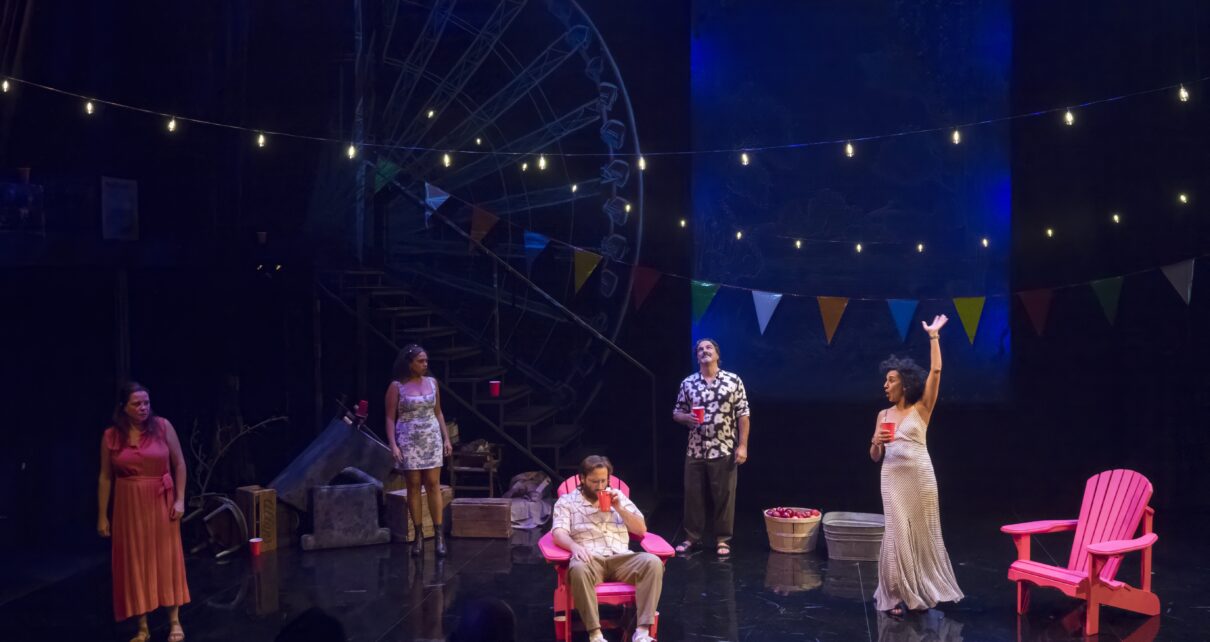
The cast is marvelous: performing the characters’ uniqueness, with excellent comic timing. They make these maddening people endearing and even lovable. They make the desire to avoid change and loss as not only funny but also touchingly familiar. The sets are simple but very good, giving a scale of the house, and showing the orchard through video imagery. During the show, a sound occasionally tolls, like a siren forewarning an impending catastrophe- very ominous.
Family and inheritance can be a big burden. But we still have a responsibility to the meaning of family and its history. However, if legacy is built on destruction, what is its true value?
Photo Credit: Andrée Lanthier
Sakura- After Chekhov. Written by Harry Standjofski. Directed by Eda Holmes. Show continues to October 6, at the Centaur Theatre, 453 St-François-Xavier, Old Montreal. For tickets call the box office at 514-288-3161 or go to www.centaurtheatre.com