For Curtains Up by Samantha Wexler
A trip to the theatre is always a cause for celebration. It is a time to dress in snazzy clothes and celebrate the fact that we have the privilege to experience such magnificence. Last night was no exception, as I dressed in a fancy steel grey dress and sparkly black shoes, I anticipated what I would see during The History of the Devil.
The venue – Cinquième Salle is intimate with stadium seating, just enough to have a good audience but not too much to be overwhelming. The seating is first come first served, if you want a particular seat then get there early. As I took my seat in the last row I looked upon the stage which was sparsely decorated with some spiderweb-like yellow ropes hanging from the rafters, a row of mannequin parts along the back of the stage and a few white cube and rectangle shaped boxes that we would later find out are used to house different props, and were used in many different ways to convey different locations in the play, from a courtroom to ancient Greece to Gothic era France. There were a couple of people on the stage, one character who was holding a skull in the spirit of Hamlet and another character who was holding broken mirror pieces. Eight people portrayed thirty four different roles in an impressive display of different costumes, masks, lighting and prop set up.
The History of the Devil is the story of the Devil – or Lucifer the fallen angel – who is on trial for his alleged crimes against humanity. If he wins the trial he will be allowed back into heaven. The ultimate question is whether Lucifer deserves to be in heaven. Through a series of historical vignettes traveling through different times, the actors convey different stories where Lucifer had “allegedly” created chaos and destruction. The prosecution tries to show Lucifer as the harbinger of evil while the defense depicts Lucifer as a fallen angel who was in the wrong place at the wrong time, someone who is very close in character to humanity itself which begs another question: as to whether humanity even deserves to go to heaven.
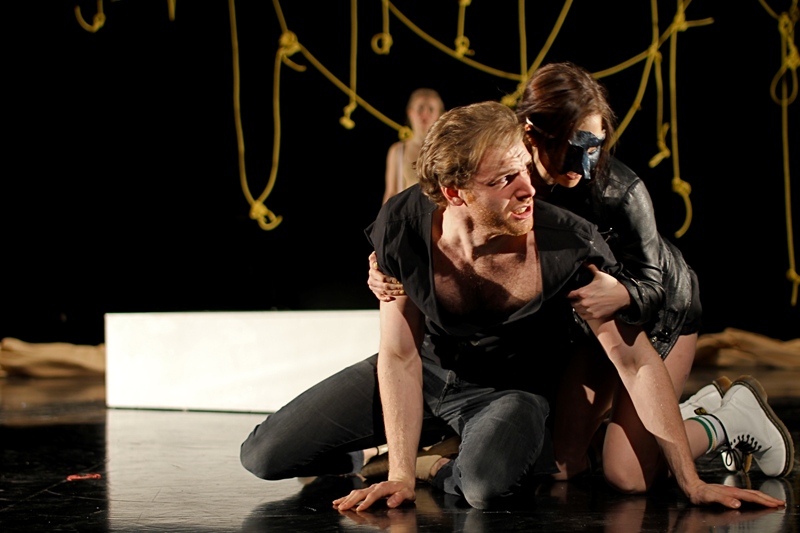
The palette that was used in the play was limited to whites/beiges, black and yellow. Lucifer and his minions wore black, the humans wore white and many of the props were bright yellow. Symbolically speaking white is purity, black is traditionally associated with evil or darkness, and sometimes not even considered a color and yellow is associated with sunshine and optimism as well as cowardice betrayal, and madness. During the play you can see how the yellow is used for both sides of the symbology scale. It is used as wine bottles and gavels as well as clothing
The actors convincingly shifted into the many different characters and back again with ease as if they were slipping into skins that were very familiar to them. It was also interesting to see the vast array of ways that the minimal props and lighting were used in the different vignettes giving each a unique feel and texture. The History of the Devil is a very enjoyable play with some very funny parts as well as some very poignant parts that will tug at your heartstrings. I thoroughly enjoyed myself and for a moment lost myself in the magic of theatre.
Playing at Place des Arts August 1-3, 2013 at 8pm in Cinquième Salle
Director: Jeremy Michael Segal
Title 66 Productions