by Andreas Kessaris for Curtains Up! (@AKessaris)
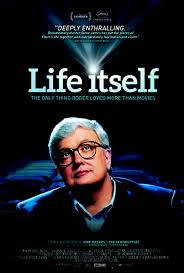
I first heard of Roger Ebert, or more accurately Sneak Previews (the PBS movie-review show he co-hosted with Gene Siskel), thanks to Mr. Eccles, my Grade Six teacher at Barclay Elementary who spoke of the show (broadcast locally on Vermont-ETV), often in class. From the first time I saw it I was hooked. I followed Siskel & Ebert through their commercial syndication until the former’s death in 1999. As big a fan as I was, oddly enough I had never read a newspaper review or article from either until my brother gave me a copy of Roger Ebert’s Movie Yearbook 2001 (a thick volume I used as a bathroom reader for about a year and a half), for Christmas, and I discovered how adept he was with the written word. After that I sought out just about any Ebert book I could and became a fan of the writer as well as the TV film critic. Roger Ebert is the subject of Life Itself, a documentary film by award-winning director Steve James and executive producer Martin Scorsese (two filmmakers who owe their early success to Ebert’s enthusiastic reviews), based on the memoir of the same name.
Life Itself follows Ebert from his early years in Urbana, Illinois to later in life when his face was horribly disfigured by cancer (graphically conveyed in the film), and everything in between. Throughout the movie passages from the subject’s autobiography are skillfully read by voice actor Stephen Stanton doing a spot-on, almost eerie impression of Ebert. Most of the story is recalled by friends, colleagues, and his wife, Chaz.
It was wonderful to hear Ebert remembered so fondly by his loved ones. I especially enjoyed the stories and outtakes concerning Gene Siskel in which they bickered and called each other names like children in a schoolyard (one of the many moments where I surprisingly laughed out loud), that encapsulated their productive yet complex relationship. And the scene where Chaz described his final moments almost brought me to tears. When the movie was over, I felt like I was saying a final goodbye to an old friend.
Although Ebert was a superior writer, Life Itself was one of the rare times the movie was better than the book. The original memoir (which I reviewed years ago for the now defunct Local Herald), I found dull, bland and dispassionate. For some inexplicable reason it contained numerous ridiculously long passages about his favorite restaurants and what he liked to order. His anecdotes were flat and often went nowhere. I speculated at the time that perhaps it was his love of the cinematic arts that inspired his creativity. This is likely another reason why Life Itself worked better as a film. I learned more about Ebert, and I could tell James, as well as the people he interviewed, like Werner Herzog and Errol Morris (two other filmmakers who owe the beloved Chicagoan for helping with their careers), were inspired by this project, and so it never failed to be interesting. When I think about it maybe it’s fitting that, despite being a Pulitzer Prize-winning writer and renowned TV presenter, the ultimate tribute to a man synonymous with the cinema be on the big screen.
I saw Life Itself on a hopelessly rainy Monday afternoon; a day made for going to the movies. It is currently playing at 4 pm every day at the Cinéma du Parc; an appropriate place for a traditional cinephile. Do yourself a favour and check it out. (And for Roger Ebert’s best writing I recommend The Great Movies I, II & III; 300 excellent essays on 300 outstanding films.)

