By Andreas Kessaris for Curtains Up
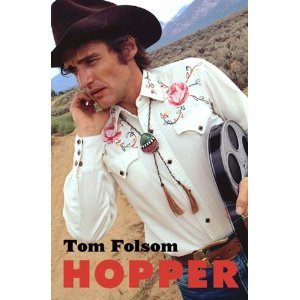
In the annals of Hollywood history Dennis Hopper was and will remain an enigmatic figure. Actor, writer, director, photographer, artist; he had it all, lost it all, and got some of it back in a place renowned for being cold and unforgiving; from character actor, to toast of the town with Easy Rider, to a renaissance as tinsel town’s villain de jour, his more than five decades in the business were truly remarkable. Hopper was not the greatest or most gifted or prolific; he was not the biggest star or the most loved or respected, (in fact many of his films were awful or downright embarrassing); so the question remains: Does he deserve a biography?
Hopper never bothered to pen an autobiography. Did he think he would have more time? He certainly had nothing to hide. In fact I remember seeing he give multiple long interviews and found him to be very candid and enthralling; an exceptional raconteur (except when his chemically-damaged memory cost him almost a million dollars after an ill-advised anecdote on The Tonight Show lead to a lawsuit from fellow actor Rip Torn). So the task was taken up by author and documentary film producer and director Tom Folsom.
A few years ago I saw Folsom on The Daily Show plugging his book The Mad Ones: Crazy Joe Gallo and the Revolution at the Edge of the Underworld. The interview with John Stewart went well enough that I read the book, and was thoroughly disappointed. His five-minute television appearance was more appealing and informative than the book he was promoting. His writing is over-done, self-absorbed and pretentious, drawing attention and detail away from the book’s subject.
I recall a short while ago a writer friend of mine showed me a passage in Strunk and White’s The Elements of Style about how one should avoid a “breezy” writing style and described authors who employed that as being “egocentric.” I think Folsom is exactly whom they were referring to. It is acceptable if there is an over-all point to be made by being so over-the-top, but it should not be used for its own sake or to say: “Look at me! Look at what I can do!” Like his last book, Hopper is long on flash at the expense of potentially interesting facts.
Dennis Hopper was a captivating man who knew a lot of famous people and did some far out things, but we get so bogged down trudging through the mud of Folsom’s writing technique that Hopper frustratingly never pays off. We don’t discover who he was and we are left unsatisfied, with little bits of information here and there, but not enough to create a real portrait of the man. When we are told that Hopper once brandished a firearm at a high school assembly (and many other public places as well), or otherwise behaved in a way that was inconsistent to the peace-loving hippie rhetoric he often dispensed, (especially given Easy Rider’s theme and ending) we can’t comprehend why. Suddenly in the middle of the book there was a fourth wife, well who was wife number three, and what happened to her? Many of Hopper’s actions would lead us to believe he, like many others who abuse alcohol and drugs and act aggressively, suffered from some kind of mental illness but that avenue, disappointingly, is also never explored.
To be fair while the book Hopper is not always pretty to read, it does at times pique one’s interest. There is some inside Hollywood information like how Peter Fonda came up with the idea for Easy Rider, a few stories from the troubled set of Apocalypse Now, and we learn about the inspiration for the character of Biff Tannen from the Back to the Future movies, in addition to rare details about Hopper that to me at least were previously unknown; but we never get a sense of what made him tick. It was like trying to put together a jigsaw puzzle with numerous pieces missing.
So to answer my earlier question, does Dennis Hopper deserve a biography? Yes he does. But Hopper by Tom Folsom isn’t it. Dennis merits a more thorough and serious one.
Other books in the genre I would recommend are The Kid Stays in the Picture by Robert Evans and the amusing and fun If Chins Could Kill: Confessions of a B-Movie Actor by cult favorite Bruce Campbell.


