By Stuart Nulman
In 1965, Frank Peppiatt and John Aylesworth were in the midst of a gig as the creators and writers of the short-lived NBC pop music show “Hullabaloo”. One day, their manager Lester Gottlieb asked the pair to embark upon a whirlwind weekend train trip to Miami. The reason? To have a meeting with “The Great One” himself – Jackie Gleason, who personally requested the team of Peppiatt and Aylesworth to come up with ideas for an upcoming Gleason TV special.
Peppiatt asked Gottlieb why would the legendary Gleason want to employ the comedic services of the duo.
Gottlieb replied: “Because Jackie Gleason is the agency’s biggest variety star and variety is king of TV land and Peppiatt and Aylesworth are the crown princes.”
For three decades, the team of Frank Peppiatt and John Aylesworth and ruled the world of the TV variety show genre as one of its most prolific, in demand writer/producers. These Toronto natives had the good fortune of churning out scripts and creating/producing TV variety shows and specials for some of the biggest names in show business during that 30-year period: Judy Garland, Steve Allen, Frank Sinatra, Jonathan Winters, Perry Como, Julie Andrews, Sonny & Cher and Andy Williams.
And in 1969, in response to CBS’ request for them to create a summer replacement series to fill the time slot left vacant by the Smothers Brothers, they decided to exploit the rising popularity of country music in America at the time, combine it with comedy and make a variety series that would reach middle America. The end result was a show that was universally savaged by the critics, but won its time slot throughout its 12-week run … “Hee Haw”. And although it ran on CBS for two full seasons after that fateful summer of ‘69, Peppiatt and Aylesworth had the foresight to take the show to syndication, where it became a huge success for over 20 years.
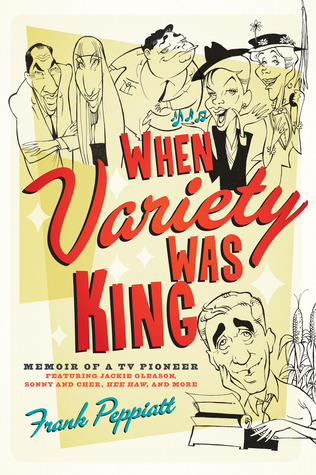
Peppiatt, who died of cancer last November (Aylesworth died in 2010), recalled his fascinating (and somewhat envious) career as a successful TV comedy writer/producer during the golden age of variety in his highly entertaining memoir “When Variety Was King”.
He traces his career from his humble beginnings during the late 40s and early 50s as a copywriter and production assistant in the radio department at MacLaren Advertising, which was the largest advertising firm in Canada. It was there that he met another newly-hired copywriter named John Aylesworth, and almost immediately the two were notorious throughout the firm for their off-the-wall sense of humour. When the CBC was about to start its TV service in 1952, the nascent TV network called upon the Peppiatt and Aylesworth to write – and act in – comedy sketches for a late night variety show called “After Hours”. The show began to attract a loyal following for the duo’s sketches that featured their unique brand of offbeat humour, especially their Superman parody sketches, in which Peppiatt (wearing a Superman costume that was made from scratch by his mother) would quickly transform into Clark Kent … by simply putting on a fedora and a pair of glasses (which was a statement to CBC Television’s rather tight production budget at the time). From there, he and Aylesworth became the writers to go to when their variety series needed the services of a sketch writer (including “The Big Revue”, which was directed by a newcomer named Norman Jewison).
The lure of American TV and the big money it paid hit Peppiatt and Aylesworth in the mid-50s, when they were asked by Steve Lawrence and Eydie Gorme to be the main writers for their summer replacement series. And throughout the next two and a half decades, the biggest names in the New York and Hollywood TV worlds asked for Peppiatt and Aylesworth if their variety specials or series needed to be created, spruced up or their scripts needed serious doctoring.
And of course, with so many years of TV writing experience and rubbing shoulders with so many A-list celebrities, one is likely to collect a wealth of stories and anecdotes. And Peppiatt is not afraid to share this wealth of stories in his book, which is what makes it so immensely appealing.
Two favorite stories that are told in the book deal with Peppiatt and Aylesworth attending a party at Judy Garland’s house just after they were hired as writers for her ill-fated CBS series. Told to arrive “around seven-ish”, they arrived just before 7 p.m., only to find no one there (most of the guests – and host Judy – arrived around 8 p.m.). The only person there was fellow Canadian Glenn Ford, who was sitting on the couch reading a script. When Peppiatt greeted Ford as a fellow Canadian, Ford practically ignored him and went back to his script.
And then there was the time when the duo went to the small town of Cummings, Georgia to interview a prospective “Hee Haw” cast member (which turned out to be Junior Samples, who was one of the most popular members of the cast). They conducted the interview over a homemade southern-style lunch, which included freshly made turtle salad (which Peppiatt admitted was quite enjoyable).
Beside the generous helpings of anecdotes, Peppiatt also describes the pressures he endured trying to keep up with the everyday pressures of writing scripts and producing variety shows on a budget, and how it played havoc with his personal life. His father – right up until his death in 1961 – always thought his son’s line of work was rather trivial (he preferred that his son have a career in the courtroom as a lawyer, not in the writers’ room). His first wife Marilyn was rather shrewish, and constantly refused to follow him when his career took him to the States (but relented when she was given carte blanche to expensively renovate a 200-year-old coach house in suburban New York). And at times Aylesworth would never express his personal feelings to Peppiatt, and found out too late what he wanted professionally, with somewhat damaging results. And the end result for Peppiatt was a total nervous breakdown, from which he eventually recovered from after a six-month stay in a psychiatric hospital.
“When Variety Was King” is an enjoyable look back at a long lost TV genre from behind the typewriter of a harried, talented, humble Canadian writer who modestly carved a niche for himself as an unsung hero of the golden age of television, who had a lot of fun and had very few regrets throughout such an impressive showbiz career.
