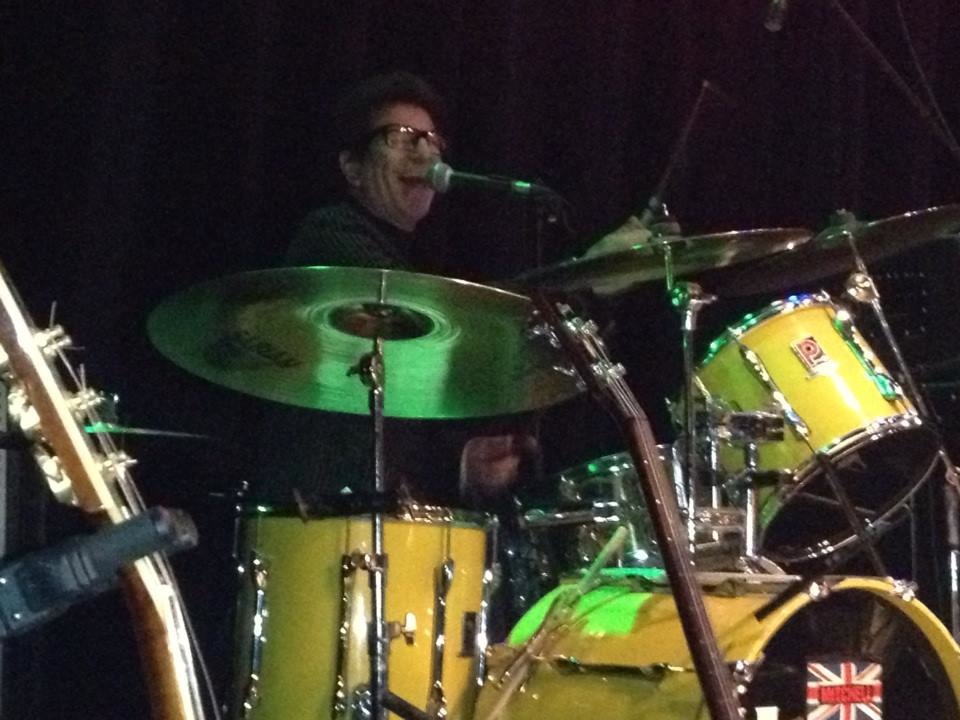
Mitchell Field for Curtains Up
All of our favourite musical memories were conceived in the brain of a songcrafter. What follows are a few thoughts and observations on a topic that is rarely explored. I have also included a few tips and exercises used by song writers and a quiz to test your pop IQ.
“The Big Picture”
I recently watched the movie “Music & Lyrics” starring Hugh Grant and Drew Barrymore. It was a pleasant waste of ninety minutes. Yet another romantic version of how a song is written. Previous bio pics based on the lives of Ray Charles, Johnny Cash, and Jerry Lee Lewis did not spend much time focusing on the actual process of song creation. All three artists had larger than life personalities and their rags to riches stories featured lots of sex, drugs, arrests, and scandals. In other words…Hollywood gold. Perhaps this explains why the iconic songs became secondary. A sound track linking scenes together. But, “Hit the Road Jack”, “I Walk the Line”, and “Great Balls of Fire” were born somewhere.
“Atoms Becoming Molecules”
Call it a formula or a gift. Perhaps it’s magic. Since all music is based on math there is also theory and logic involved. McGill Faculty of Music offers a low cost six week seminar each year that I attended and thoroughly enjoyed. Even though I have been a professional musician for forty five years I still love to learn about music. Information is power. Having a (basic) knowledge of music theory is not compulsory (i.e. Lennon / McCartney). Reading and writing music is not mandatory (i.e. Michael Jackson). Endless practicing and developing your muscle memory is a technique some obsess over (i.e. Buddy Rich, Glen Gould). Others such as Sid Vicious can barely tune their instruments. Does it matter? It is up to you.
As a self taught musician and song writer I suggest you use your own intuition (inner ear). This is a vital skill that must be sharpened if you are to develop your own style. Some song writers play an instrument, but others don’t. Some write with a partner (i.e. Bacharach & David and Gilbert & Sullivan). Some write solo (i.e. Taylor Swift or Bob Dylan). Some writers don’t sing so they write songs for other people (i.e. Henry Mancini “Moon River” and Cole Porter “Night and Day”). Some do sing, but write for others to earn a living (i.e. Carol King “Natural Woman”, Neil Diamond “I’m a Believer”, and Paul Anka “My Way”). A few song writers are famous for other talents (i.e. Charlie Chaplin “Smile”, Kris Kristofferson “Me and Bobby McGee”, and “Gong Show” host Chuck Barris who wrote the sixties hit “Palisades Park”. Classically trained pianist Victor Borge poked fun at stuffy music purists. He would play the songs backwards or upside down. He also attached a seat belt to his piano bench so he would not fall off.
“Rhythm: A Simple Explanation”
Rhythm is also called the back beat, the tempo, or the time signature. Most pop music has a beat. Let’s call it a pulse. Remember disco? It was based on the 4/4 time signature. Sounds difficult? Not really. If you listen to “Smoke on the Water” and count 1, 2, 3, 4. Your foot will automatically tap on the 2 and the 4 beat. Most humans are hard wired this way. Listen to any AC/DC song and see for yourself. Some songs use a faster pace which is based on the number of beats per minute (I told you there is math involved). Cutting the beat in half is called 2/4. Listen to any Ramones song and use it as a quick way to remember the term 2/4. The third most commonly used time signature is 3/4. Before your head explodes with all these numbers here is a tip. Think of any waltz you have ever heard… That is 3/4. You have now learned three easy ways to correctly identify the 4/4, 2/4, and 3/4 time signatures. I will bet you did not know how to do that ten minutes ago.
“Song Construction”
Imagine you were building a “musical church”. Begin with a solid foundation built on a rhythm. Next add the nuts and bolts of melody and harmony. Mix in the bricks and concrete of chords and dynamics. Then use your arrangement tools to top it all off with a lyrical steeple. Think of the church tower as the high note that singers usually hit towards the end of the song (i.e. Whitney Houston “I Will Always Love You”, Roy Orbison “Crying”, and Aerosmith “Dream On”). Songs are also built from the ground up and rise to a peak. This is referred to as “the melodic goal”.
“How Long Does it Take?”
I have written complete songs in ten minutes. Others I have laboured over for years. “She Loves You” was started in the back of a van on the way to a performance in New Castle. After the show John and Paul finished it in their hotel room. It became the best selling single of the sixties in the UK. “Sometimes it’s all there, but sometimes I have to sit down and do it” – Paul McCartney.
Take a listen to “Rhapsody in Blue”. This sixteen minute masterpiece combined ragtime, the blues, Latin and Eastern European influences with symphonic power to create a history of American music. George Gershwin wrote and arranged it in three weeks.

Not all “song embryos” become fully formed. These frustrate and challenge the songwriter. We might revisit them from time to time trying to breathe new life into them. But, some songs remain a puzzle – they can never complete. Parts of these songs might end up as salvaged parts in other songs. Tip: Don’t throw ideas out… file them away.
“Pop Quiz”
- Name a hit song where the title is never mentioned.
- Why wasn’t “Yellow Submarine” called “Orange Submarine”?
- What is the saddest six word story ever written?
- How do I keep smart people reading my columns?
“What Comes First: The Words or The Lyrics?”
Could you start with a blank page and create something that did not exist before? Using just your imagination and the ability to open your ears and mind could you identify words that go together well?
“So You Want to be a Song Writer”
Unlike most jobs there are no regular hours, age barrier, or heavy lifting. But, before you quit your day job, be warned, unless you have a get rich slow scheme as part of your master plan it’s not the most financially secure choice. I advise most people to have a plan B or rich parents. Tip: If you don’t have a plan B you don’t have a plan A.
“The Process”
A novelist has the luxury of hundreds or even thousands of pages to describe characters and events. But, the pop song format only allows the song writer a three and a half minute window of expression. Their mission is to take you on a melodic journey. A well designed song features a beginning, a middle, and an end. Using chords, lyrics, and rhythm the writer must connect with the listener on an emotional level. This is the key to writing hit songs. Some examples of stories the listener can relate to include “The Gambler” by Kenny Rogers, “Yesterday” by the Beatles, “I Will Survive” by Gloria Gaynor, and “Living on A Prayer” by Bon Jovi. There are proven formulas and recurring patterns in most hit songs (common denominators). These are based on music theory. But, for me, the most important element is inspiration. “When I get a song idea it’s like God has entered the room” – Quincy Jones. Think of ideas as stars waiting to be discovered. Our daily world is filled with signals in the noise. Song writers must train their inner ear to constantly scan for catchy phrases, interesting word combinations, and “hooks” that will grab the listener.
“Write it Down”
Never put off writing down ideas for songs. You must capture it before it fades. I have dozens of notebooks full of song titles, scribbled lyrics, and snatches of overheard conversations. Jimi Hendrix always carried around a brown paper bag stuffed with cigarette boxes and hotel stationary covered with lyrics and lines he would later use in classics like “Angel” and “If Six was Nine”. Sometimes if I get a “song bubble” in my head I will call my answering machine and hum or sing the basic outline of the idea, so I can review it later. Yes, I still use an answering machine. For me, low tech is the best tech.
“Exercises for New Song Writers”
- Grab a pen and paper. Clear your head of all clutter. Let thoughts and worries float off like clouds. Write down whatever comes to mind. It does not have to rhyme or make sense. This is a quick way to tap into your subconscious. I have found that stream of consciousness exercises lead me to ideas I did not even know I had.
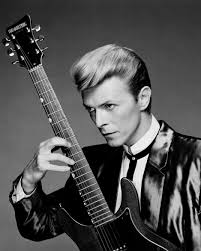
- “We can’t even think of a word that rhymes” Actual lyric “School’s Out” by Alice Cooper. Even professional song writers get stuck trying to write lyrics – writers’ block. If this happens to you don’t stress. Take a break. Grab a magazine and a pair of scissors. Cut ten pages into two inch vertical columns. Scatter the pieces randomly on the floor. Use word association to create paths to new ideas. You may scoff dear reader, but this approach works for David Bowie.
“Tips for New Song Writers”
- Less is more. Have you ever seen an over decorated Christmas tree? It does not work does it? The same applies to song crafting. Pioneers of the art form include Hank Williams “Your Cheatin’ Heart”, Chuck Berry “Johnny B. Goode”, and the Everly Brothers “Bye Bye Love”. These writers knew not to overload the listener with too much information. These songs became the template for everyone from the Beatles to the Ramones. Tip: If in doubt leave it out.
- Don’t get “married” to an idea. Remember authors write. Song writers re-write. Try to be open and flexible. Most initial ideas referred to as “motives” can be developed and expanded upon to become better, more focused ideas. This is the craft of song writing.
- Don’t be afraid to bend the rules. Listen to the last few bars of “For No One” by the Beatles. Notice how the final phrase of the song seems unresolved. “Live and Let Die” by Paul McCartney and “We Gotta Get Outta This Place” by the Animals are two other examples of songs that seem to leave the listener hanging. Song writers use special chords to create tension and release. This technique is called suspension and resolution. If it sounds like it is hanging in mid air it is a suspended chord. If it doesn’t it is a resolved chord. See how easy music theory is.
- Never write songs with the radio on. This might influence or pollute the process. George Harrison was sued because of the similarities between “My Sweet Lord” and “He’s So Fine” by the Chiffons. George lost the case. Remember “Ice Baby” by Vanilla Ice? Didn’t it sound a lot like “Under Pressure” by Queen? Mr. Ice strongly denied it. Recently the estate of Marvin Gaye filed a law suit against Robin Thicke’s song “Blurred Lines” alleging it contains pieces of Gaye’s hit “Got to Give it Up”. Hum the first four bars of “When you Wish Upon a Star”. Now sing the first four bars of “Surfer Girl” by the Beach Boys. Notice how they sound alike yet different. The reason? Both songs open with a fourteen note melody. Brian Wilson acknowledged that “Surfer Girl” was based on “Star”, but he was careful not to rip it off. Tip: Good artists copy…great artists steal. “A Lover’s Concerto” by the Toys is based on a Bach composition in “G Major”. They simply added lyrics. In today’s digital world of DJ remixes, loops, and samples it’s a fine line between inspiration and plagiarism. Music attorneys are as happy as a drummer on pay day.
- Songs are poems put to music. If you write lyrics or poetry consider collaborating with a co-writer. It is a big plus if they play an instrument and you don’t. This approach won’t work for everyone – control freaks for example. But, if you are able to check your ego at the door and listen to constructive criticism it’s another way to make music. “Bernie (Taupin) just hands me a bunch of lyrics that I haven’t seen before and I sit at the piano and begin”- Elton John.
- Writers use words to say things. Read more. It will improve your vocabulary. Buy a thesaurus and a rhyming dictionary, but try not to rely on them as a crutch too much.
- Some songs begin with the title. Example, “She Loves You”, “Yesterday”, and “Help”. Write a list of your own original song titles and use them as a starting point.
- When writing lyrics try to “think like a singer”. Words that start with a vowel easily roll off the tongue, but “k”, “d”, and “z” words not so much. Listen to the German version of “She Loves You” for a perfect example of so called “harsh” tones.
- Study the masters. If you are serious about writing songs you owe it to yourself to do your homework. Some of the songs I have listed might not be your style, but all of these songs have one thing in common – they were hits. It is your job to find out why. Pay special attention to the basic components. Analyze the structure. Listening carefully to these examples will develop your song writer’s ear and help you put the pieces of the puzzle together properly:
- “Stand By Me” by Ben E. King
- “Wouldn’t It Be Nice” by the Beach Boys
- “Crazy” by Patsy Cline
- “Billie Jean” by Michael Jackson
- “My Love” by Paul McCartney
“Variations on a Theme”
In this article I have focused on the pop song formula. However, it is important to point out that some contemporary types of music use a different matrix and utilize a larger canvas and a longer time frame. Jazz standards “Misty” and “Autumn Leaves” start out with the basic melody to establish it in your mind. The second time the musicians will improvise around the melody and even stretch the form improvising solos “in the moment” before returning to the main melody for closure. Louis Armstrong and Miles Davis are masters of this technique called “variations on a theme”. Suggested listening: “Take 5” by Dave Brubeck.
Ravel’s “Bolero” and Mike Oldfield’s “Tubular Bells” offer a different approach to “variations on a theme”. They restate the melody repeatedly, but add more instruments each time around to build to a dramatic climax.
“Enter Sandman” by Metallica is a modern example of variations on a theme. It starts with a heavy metal guitar riff. Then builds momentum by adding more layers as the song progresses. Music professors will tell you this process is called “Iteration”, but I won’t. Death Metal, Grunge, Progressive Rock, Electronic Dance Music (EDM), and Intelligent Dance Music (IDM) approach song structure from a different perspective. Opera and Broadway show tunes also allow for more character development and complex arrangement that utilize more instruments than your average rock and roll band.
Rap and Hip Hop has proved to be more than a passing fad. These artists might get their song ideas from a drum machine or a beat box. Combining a rhythm with a DJ they can then build the track by adding guitar riffs and samples from other bands and then rap over it. When Run DMC teamed up with Aerosmith to re-record “Walk this Way” it proved that rock and roll and rap could not only co-exist, but also appeal to fans of both bands. Some called it a sell out, but thanks to extensive exposure of the video on MTV Aerosmith received airplay on rap format radio and Run DMC was played on rock radio. The Beastie Boys and Eminem continued the trend. Today Rap and Hip Hop’s fingerprints are incorporated in many types of music (i.e. Linkin Park and Nine Inch Nails).
“Ripple Effects”
During the early days of Hip Hop and Rap, James Brown was the most sampled artist. Drum fills were ripped off and exploited. No royalties were ever paid. Today the drummer for James Brown is elderly and unable to perform. He could surely use the money owed him, but says he has never received a penny or even a thank-you from any rap artist that got rich “borrowing” from his creations.
“Summary”
Aspiring to be a song writer is a noble goal. Songs make people happy. Songs make people dance. Songs become interwoven into the tapestry of our lives. There is no “right way” to write songs. Whatever method works for you is right. These tips and exercises are just a guide. If you hit a note or chord that sounds like “a musical tooth ache” you will know it immediately. Trust your ears. Don’t over think it. I encourage you to try these tips and exercises especially if they are out of your comfort zone. It just might be the little push you need. Let me know how they work for you. I welcome your questions and feedback. Happy New Year to all!
Quiz Answers:
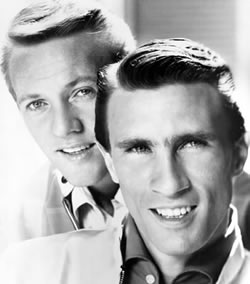
1) “Unchained Melody” by the Righteous Brothers.
2) No word in the English language rhymes with “orange”.
3) “For sale: baby shoes, never worn” Ernest Hemingway
4) Tell you next time.


Great article and a fun read. Had me searching for song titles ! I came up with a few but I guess that didn’t qualify as hits, although they’re well known…like Hey Gyp, For What it’s Worth, Suite Judy Blue Eyes etc.