Abby Elizabeth for Curtains Up
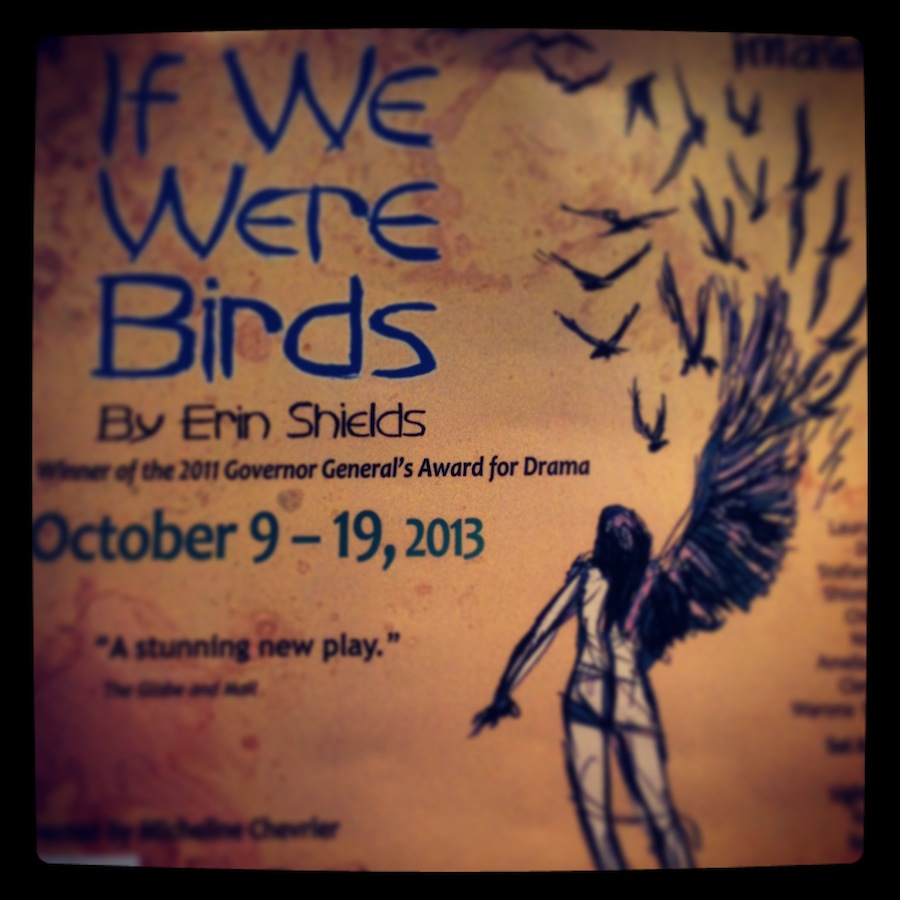
It is no surprise that playwright Erin Shields won the 2011 Governor General’s Award for her play ‘If We Were Birds.’ The production which is an adaptation of Ovid’s ‘Tereus, Philomela and Procne,” received a teary eyed standing ovation on opening night.
Pandion, King of Athens decides to marry off his eldest daughter Procne to combat general Tereus. His younger daughter Philomela is heartbroken because her sister is whisked away to begin a new life without her. A few years pass and Procne and Tereus are happily married with a young son whom they both adore. Procne misses Philomela desperately and decides that she must see her sister at once and convinces Tereus to fetch her sibling from the castle for a visit. Upon arriving at the palace, Tereus is consumed by lust for his wife’s younger sister and rapes her. In order to keep her quiet Tereus cuts out Philomela’s tongue and disposes of her in the woods. Procne is told that her sister has drowned and never suspects otherwise. However, Procne does eventually find out what has really transpired and in her rage she plots revenge on her husband. Procne murders their son and feeds him to her unsuspecting husband. Tereus only finds out the source of his dinner after he has eaten the remaining morsels.

Yes, Ovid’s tale is a gruesome one. It’s about rape, cannibalism, war, anger, spite, lust and hatred. However, ‘If We Were Birds’ does not simply tell a story about extreme Machiavelli characters or one girl’s misfortune. Instead it speaks emblematically to all.
Shield’s interpretation of this mythic tragedy is one that delves into the realm of sexual violence, and social injustices. Shields successfully and disturbingly demonstrates how the world remains a very scary place for women by invoking the topic of rape and double standards through the eyes and voices of its victims: five slave women characters created by Shields. These wounded creatures (part bird part woman) seem to be inspired by the mythological furies, also known in Greek legend as The Angry Ones. The female spirits represent justice and are ordained to punish those who commit unforgivable crimes. The actresses who portray these characters are exceptionally talented women. Their ability to tell a story just through the lilt and tones of their voice is one of many reasons as to why this play is worth seeing.
The piece opens with ‘enslaved’ women encaged together in the dark, chanting the words “Speak it, speak it, speak it, speak.” The simple chorus carries a complex message throughout the play, one that reminds us that women victim to sexual assault are often forced into silence.
The ‘furies ‘is what gives the play the emotional depth it would have otherwise lacked. Each one of these captured ladies tells a horrific and captivating tale about how she ended up becoming enslaved. All of the monologues were inspired by real events taken from newspaper headlines from all over the world.
The drama reminds us that rape and sexual abuse are not isolated incidents; they occur everywhere and could happen to anyone. No matter the birth ranking or social status. At the very beginning of the play, Philomela admits to the slave women (all whom work for her father) that she believes what she had been taught: that rape is brought on by the victim. Anyone who has experienced such a trauma must have encouraged it somehow. Within this context Shields ably illustrates that both men and women are guilty of wanting to remain ignorant on the issue of sexual abuse.

According to Canadian stats 1 in 4 North American women will be sexually assaulted in their lifetime and for every 100 incidents of assault that occur, only six are reported to authorities. Not to mention that 80 per cent of sexual assault victims are women and 62% of victims are physically wounded in the attack; while 9% are brutally beaten and/or disfigured. These are present-day statistics.
Although these slave women are ‘speaking it’ aloud throughout the production, they are unseen and unheard. When Amelia Sargisson’s character Philomela is violently defiled (a vicious scene) she screeches at her brutalizer Tereus played skillfully by Nico Racicot, that she will not remain silent but tell the world about her rape. When Philomela refuses to ‘shut up’ and ‘stop crying’ Tereus slices out her tongue with his sword in hopes of silencing her forever. This specific scene is terrifying and brilliantly controlled.
Though the play stays true to its predecessor in content, the theme is geared more towards the woman’s perspective. The audience is forced to hear ’her’ story and forced to connect with her pain just as she has been forced to succumb to sexual violence and forced to remain quiet.
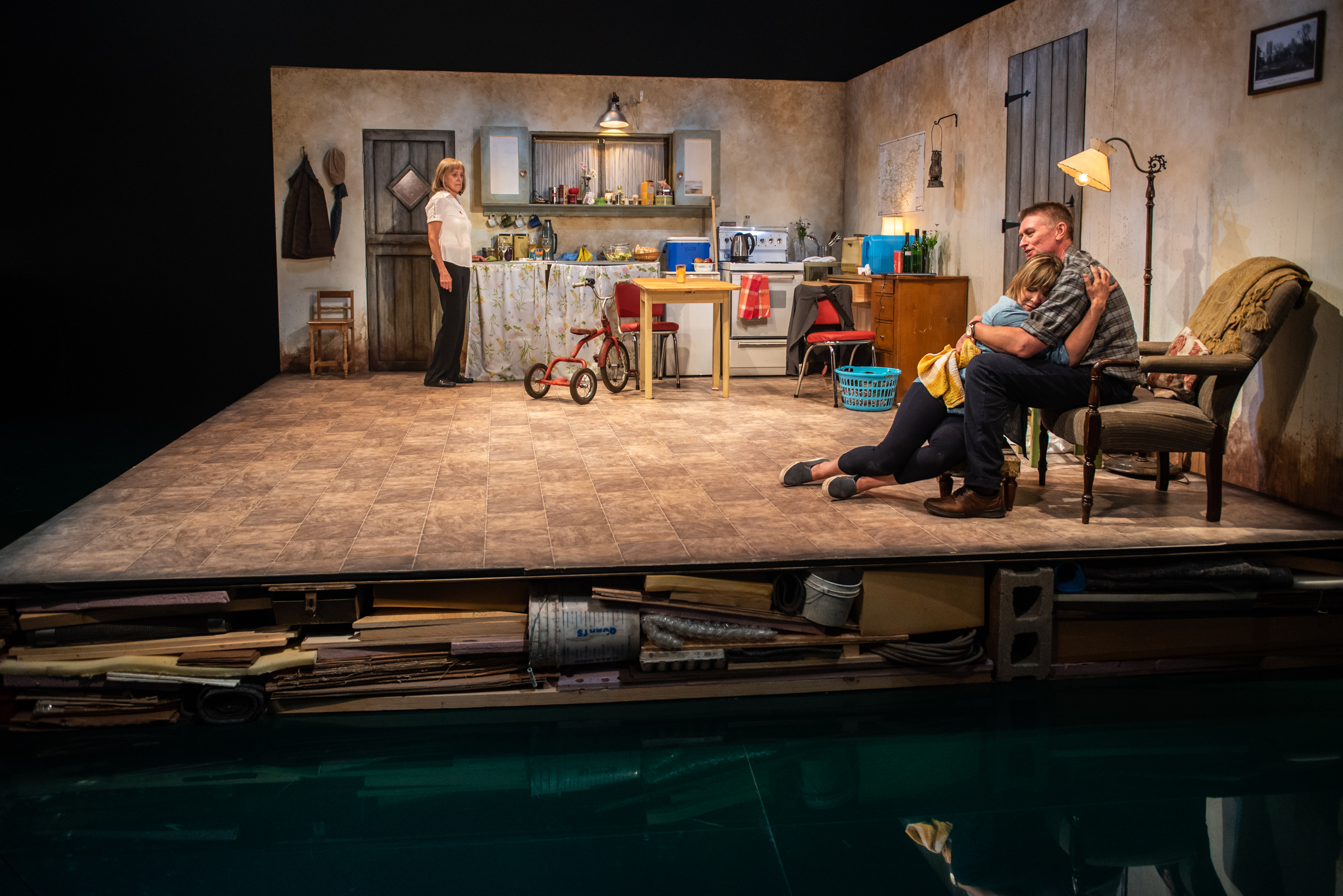
The set and the costume design contribute metaphorically to the story with its contrasting symbolic colors’ and stark prison like motives. The ‘innocent’ characters wear light/white coloured garments while the ‘guilty’ and ‘dirty’ personas are dressed in dark cloth. After Philomela is raped she becomes less of a person because she is no longer pure and so she is draped in a black cape and hidden from the world. This opens the discussion to societal double standards and the strange phenomena of virginal pureness.
The play leaves you feeling stunned and emotionally drained. It is one of the best productions I’ve seen in years. ‘If We Were Birds,’ provokes important conversation and actors Lauryn Allman, Chip Chuipka, Amelia Sargisson are especially amazing to watch.
This is a must, must see, a story that everyone can learn from.
Written by Erin Shields
• Directed by Micheline Chevrier
• Lauryn Allman as Procne
• Chip Chuipka as Pandion
• Amelia Sargisson as Philomela
• Nico Racicot as Tereus
October 9th-19th at Centaur Theatre