“What kind of music do you usually have here?”
“Oh we got both kinds. We got country and western!”
-from The Blues Brothers
By Andreas Kessaris for Curtains Up!
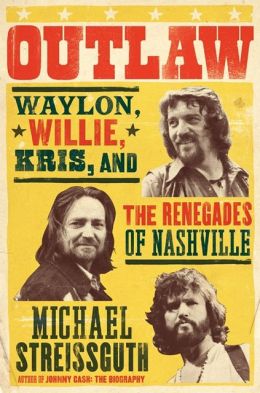
There was a time when a handful of people in Nashville had a virtual monopoly on Country & Western music. All the recording artists were manufactured from the same cookie cutter and expected to be clean-cut, conservative, wholesome, bland and inoffensive. The over-produced songs were short and usually recounted a sad, clichéd story of love lost, or courage found. They were constructed that way deliberately so as not affront the sensibilities of those who listened to The Grand Ole Opry or watched Hee-Haw while cleaning their shotguns. But in the sixties a new generation of artists that “looked and sang as if they’d just tumbled out of a Mexican whorehouse” and wrote poetic songs that combined elements of folk and southern rock, touching on formerly taboo subjects like drugs and left-wing social issues, arrived on the scene and changed the industry forever, opening the genre up to a whole new audience. That is the subject of Outlaw: Waylon, Willie, Kris and The Renegades of Nashville, a new book by Michael Streissguth.
Streissguth, no stranger to the world of C & W having penned Johnny Cash: The Biography, wastes no time getting to the point as he rapidly fires off the names of the principals involved (in what is sometimes and endless parade of people) covering the years 1965 to 1980. As much as possible he uses their own words, mostly pieced together from past interviews drawn from other books, magazines and journals, (in fact from what I could gather the only person he talked to directly for Outlaw is Kris Kristofferson), in a no-nonsense, flowing and easily understandable style.
The bios and introductions are terse, sometimes frustratingly sparse (I would’ve enjoyed having more information on the likes of Kinky Friedman, Shel Silverstein and others), making the book feel somewhat incomplete, but at the same the time the author skillfully avoids redundancies and the urge to constantly dish dirt or veer too far away from the book’s main topic. Make no mistake, in Outlaw Streissguth calls it like he sees it, but the work is primarily a celebration of songwriters, individuality and creativity (three things sadly lacking in today’s music industry) and not a tell-all book that focuses on who slept with whom and what narcotics they took while doing so, even though there are several passages with interesting (but not always negative) insider tidbits.
In the book the author occasionally employs down home metaphors and similes that sound as if they were pulled from a Hank Williams song, but they actually work quite well considering the subject matter, and contribute to making Outlaw at times a fun read. At one point he describes Willie Nelson’s voice on a particular recording as “…very urbane, careering among his lyrics like a Cadillac on a smooth and curvy highway” and record producer Jack Clement as someone who “…stood out in Nashville like a juggler at a funeral parlor.”
Ultimately Outlaw: Waylon, Willie, Kris and The Renegades of Nashville is enjoyable and informative, although of limited interest to anyone who is not a fan of Country & Western music.