This year marks the 30th anniversary of the Montreal massacre–the femicide that killed 14 women at École Polytechnique on December 6, 1989.
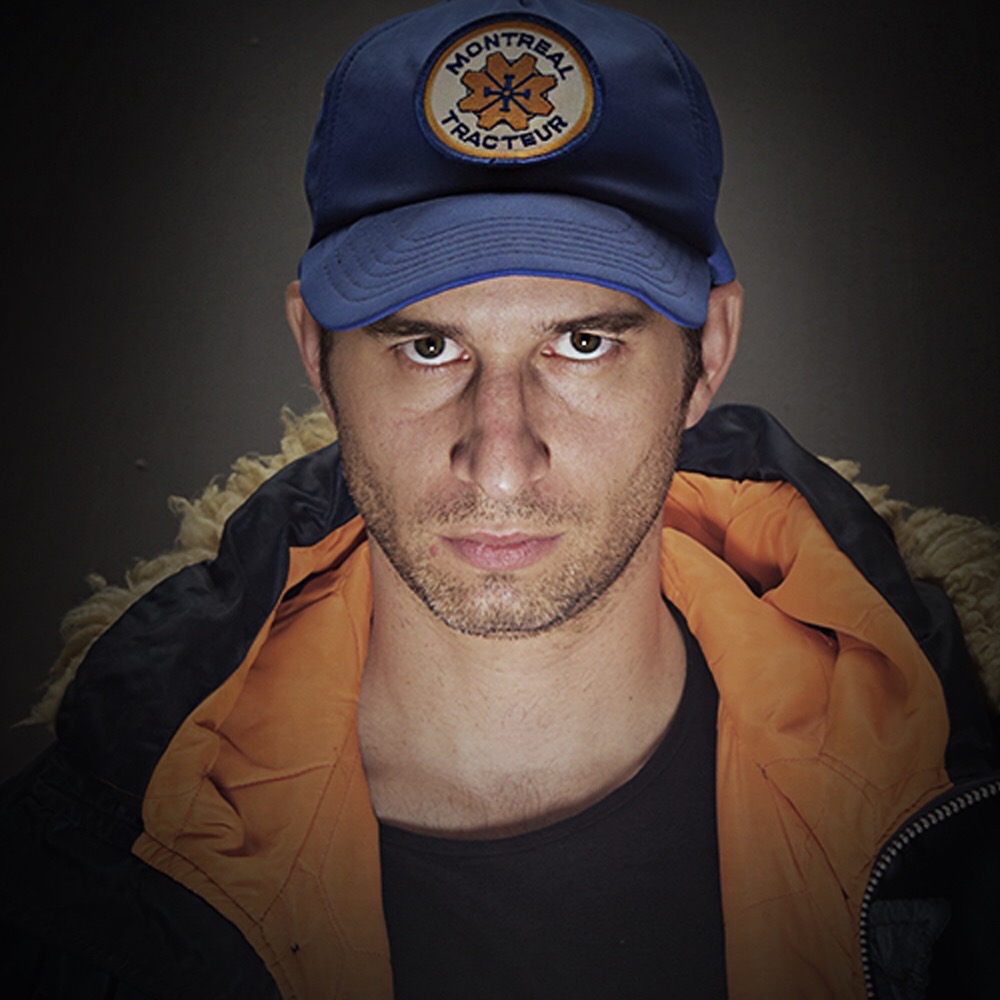
Montreal playwright Adam Kelly Morton first wrote and performed his acclaimed one-man monologue The Anorak in 2000, delivering an account of events from the point of view of killer Marc Lépine. This year, Kelly is revisiting his play from the director’s chair with actor Alex Dubois playing the lead. It runs for 6 shows only.
We sat down to speak with Kelly about his play, what 30 years has changed, and why the lessons of this event are as important today as they were 30 years ago.
CURTAINS UP: The École Polytechnique massacre is such a huge part of Montreal history–an event that has forever changed the city and how we see ourselves. Why did you choose to shine the spotlight on this point in time with The Anorak?
ADAM: I think the subject kind of chose me. We were given an assignment between first and second year of my MFA in Acting (at York University, Toronto), which was to write a 20-minute solo show to be performed when we returned to school in September. I ended up writing about a young man I grew up with who committed suicide. The story was mainly about our lives, but it also touched on the Montreal Massacre, which had had a profound effect on me when it happened (I was sixteen at the time.) Now, the show has evolved to be almost exclusively about Marc Lépine—but certain aspects of the character’s life are actually accounts of my experience.
CURTAINS UP: It has to be asked: Why Mark Lépine? What do you hope to put across by giving him the stage and the space to share his thoughts and anger?
ADAM: It has always been my hope that by opening up the events of his upbringing—and of the tragedy itself—we end up taking a look at how something like this could happen. At the end of the day, no one can truly answer how it happens, but I think a glimpse into one killer’s life can reveal a lot about the makeup of spree killers in general. There are so many similarities with these men (their being men is the first one, of course), and when we look at how family is at the root of all of our histories, I think we can better understand some of the origins of violence, and maybe even some of the warning signs.
CURTAINS UP: What do you think you brought to this as a man writing from a man’s POV about an event that targeted women?
ADAM: As far as being able to identify with the POV of this particular man, I can certainly identify with much of the loneliness, the exposure to violence, the broken home, the rejection, the suburban (Montreal) experience of isolation and disconnection. As far as targeting women, the most I could come up with are the personal rejections, and the feelings of lovelessness. With spree killings having become almost commonplace (particularly in the US), the targets seem to change almost arbitrarily—from anti-Semitic (Pittsburgh), to Islamophobic (Quebec), to anti-gay (Orlando), to anti-feminist (Montreal), to concert-goer (Las Vegas), to high school (Columbine), to elementary school (Sandy Hook), etc. But the profiles of all these men are similar, so there’s something there (definitely under the banner of misogyny) worth looking at and asking questions about.
CURTAINS UP: You’ve played the role on stage in the past. Why was it time to give it to someone else? Does Alex Dubois bring something new to the role, and if so, how does it help cast the play in a new light?
ADAM: After the 25th anniversary shows five years ago, I decided, at age 41, it was past time for a younger actor to take on the role of a character aged 25. Alex brings a lot to the role, especially that his performance is rooted in emotion. His considerable physical/dance background is also adding quite a lot, plus his instincts as an actor are strong. It was also quite an asset that he had already been in a performance about the Montreal Massacre (a piece that focussed on Lépine’s suicide letter). Alex takes the role as seriously as I took it, if not more (and I wrote it!); he has been superb to work with.
CURTAINS UP: What do you hope audiences will come away with after seeing your play, especially on the 30th anniversary of the massacre? How do you think Montrealers, especially students, see the event now with hindsight?
ADAM: Something that came up on the two occasions, when The Anorak was performed before the families of the victims, was the sense that the events of the tragedy were being forgotten; the strongest validation I have ever received about this play came from those family members who expressed that it should be seen, and that people should not forget what happened. If, on the 30th anniversary, we get some young people, like students, to have a better understanding of what went on, then good; if we get everyone who sees the play to have a better understanding, then that’s even better; if we can get everyone who sees the play to remember the events forever, and to somehow affect change in their lives, then that’s the best.
The Anorak is playing at Wesley United Church in NDG on Tuesday November 26, as well as November 29 – 30, and December 5 – 7. All shows at 8 p.m. You can get your tickets here.


