By Chef Michael Minorgan for Curtains Up
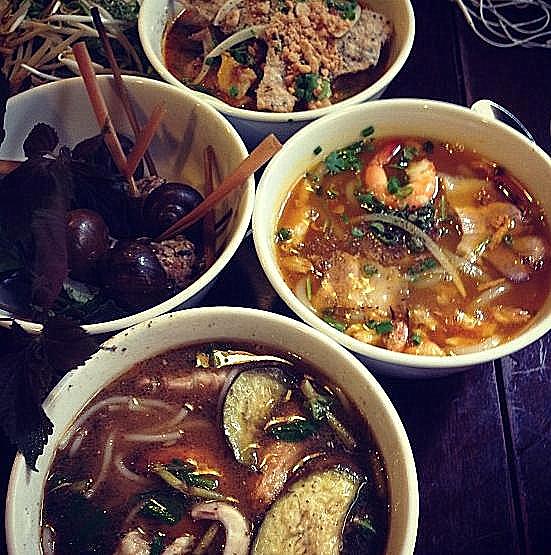
I first visited Viet Nam five years ago and immediately fell in love with its people and its wonderful food so fresh, light and packed full of intoxicating flavours. Vietnamese cuisine is considered one the healthiest in the world due its heavy reliance and liberal use of fresh vegetables and herbs. Most of its dishes employ very little oil in their preparation and many rely on wonderfully flavoured broths as their base ingredient.

One of the most outstanding and most prominent aspects of the Vietnamese food culture is its multitude of fresh food markets found in every city and small village in the country. The variety of fruits, vegetables, herbs, meats and seafood is astounding. Due to the lack of refrigeration especially in the rural areas, visits to these markets are made multiple times a day to gather foods for the family meals. Cooking and eating play an integral and extremely important role in Vietnamese culture and all the dishes are prepared with great reverence to this culture. Great attention is paid to the colors and textures of the food and its application to the senses and many foods offer an important spiritual connotation i.e. salt is commonly used as a connection between the world of the living and the world of the dead and food is quite often placed at ancestral altars, found in most Vietnamese houses, as offerings to the dead.
There are however distinct differences in the cuisines of the country as you travel from one region to another, but all are built around and are influenced by the Asian principle of the five elements (wood, fire, earth, water and metal) and yin and yang the principle of balance is always apparent when meals are prepared. Spice is balanced with sour and cold with warmth etc.
In spite of these fundamental regional variations all three regions (north, central and south) share some fundamental features.
Freshness of the food – vegetables and herbs are eaten raw and meats and seafood, when used, are cooked only briefly or very quickly stir fried to preserve their original textures and colors
- Herbs and vegetables are used extensively in all dishes
- Broths and soups are common in all regions
- Colourful and eye pleasing food presentations are paramount when food is served.

The colder climate in northern Viet Nam limits the production of spices so the cuisine here tends to be less spicy. There is a wide use of meats and seafood in the north and fish sauce, soy sauce and limes are among the main flavouring ingredients. Northern Viet Nam is the birthplace of many of the country’s signature dishes such as pho and banh cuon which have since found their way south through migration over the years.

Central Viet Nam offers probably the most enticing and diverse cuisine due mainly to the abundance of spices found in this part of the country. It is also the center of the Imperial or Royal Cuisine prepared mainly in the city of Hue, the home of the last dynasty of Viet Nam, The Nguyen Dynasty. The Royal Cuisine always features highly colourful and elaborately decorated dishes. All meals on a Royal Cuisine menu are sophisticated and constitute many complex dishes that are all served in small portions.
There are still to this day several chefs in Hue who offer courses in this elaborate cuisine. I can attest to these and found them extremely interesting and tasty..

The warm weather and the fertile soil found in southern Viet Nam around the Mekong Delta create the ideal conditions for growing rice, fruits and vegetables and for the raising of livestock and seafood. Food in the south is vibrant, colourful and heavily flavoured with garlic and fresh herbs. The dishes here are also much sweeter than in the other regions as palm sugar and coconut milk is used quite extensively.
At all Vietnamese restaurants and in all family homes meals are served communal style and are shared by all with great respect to the elders present who are always invited to eat first.
Viet Nam its food, its people and its verdant countryside in many cases reflect the calm air of a more sedate and ancient time where water buffalos still plough the rice paddies and where no attempt has been made to enter the world of mechanized farming. I find it intoxicating and wonderful.

As Anthony Bourdain, a mutual lover of this amazing country says and I agree with him most heartily, “I would love to live here, rent a house in a small fishing village in the coastal area near Hoi An and have no idea of what I am going to do. I will move in with few, if any, expectations and let the experience wash over me. Whatever happens,happens.”
Viet Nam is a beautiful country so unfortunately scarred by many wars, but with a resilient and hard working people wonderfully full of warmth, humour and hospitality and a cuisine to match any I have tasted on our planet….I can’t wait to return, cảm ơn bạn Viet Nam!